

Lowering operational emissions does not have to mean major capital projects. For most organisations, a meaningful share of Scope 3 sits in everyday consumables across cleaning, washrooms, and janitorial routines. By switching to verified eco-friendly products and smarter formats, you can achieve measurable carbon savings, strengthen ESG reporting, and improve tender success where sustainability weighting is rising. Here is how to make practical, high-impact changes quickly, with examples you can lift straight into your procurement plan.
Why supplies matter to your carbon footprint
Consumables flow through your sites every day, which means they carry repeat transport emissions, packaging, and end-of-life impacts. A sustainable alternative that is concentrated, refillable, and verified by lifecycle analysis can deliver ongoing Scope 4 savings compared to a like-for-like traditional product. When you standardise these choices across your estate, emissions and costs fall together, while your ESG reporting becomes more robust.
Are eco-friendly cleaning products effective?
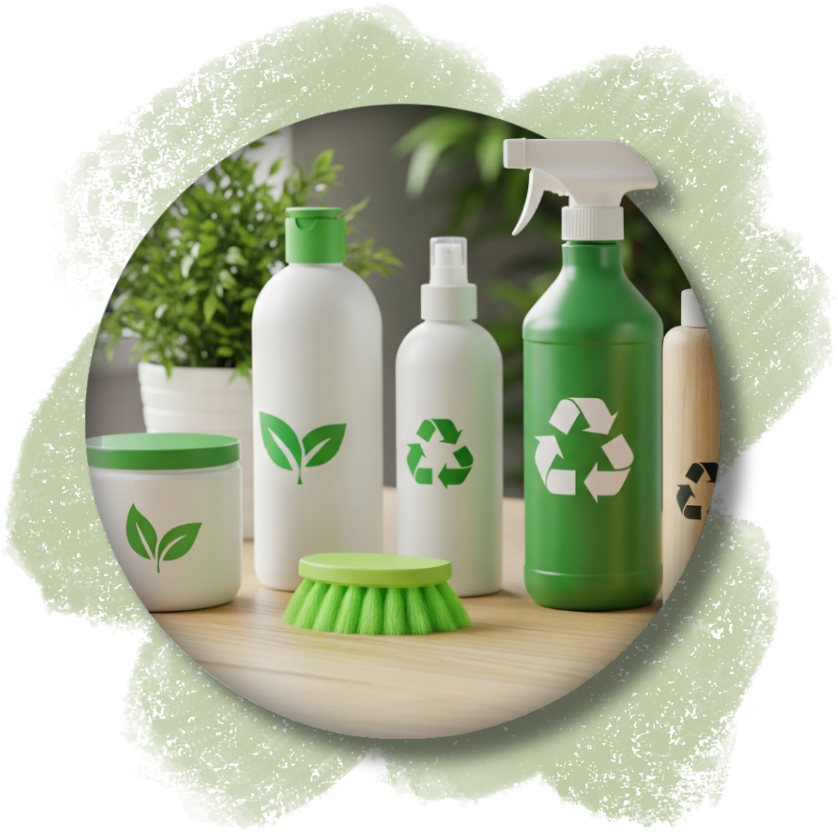 Yes, if you choose products backed by recognised certifications and real-world performance data. Look for EU Ecolabel, clear technical datasheets, and supplier transparency on lifecycle analysis. Plant-based and non-toxic formulations can match professional standards for hygiene, descaling, degreasing, and infection control when used with the correct dilution and methods. In many facilities, teams report improved indoor air quality and fewer issues with harsh residue or odours after switching to Ecolabel products and concentrated formats.
At Lime, professional formulations are designed for janitorial use with verifiable LCAs and Scope 4 comparisons against industry-standard equivalents. This lets you adopt greener specifications without compromising hygiene outcomes or operational speed.
How to know if a cleaning product is genuinely eco-friendly
Avoid vague labels and request evidence. A credible product will provide:
- Third-party certifications, for example Ecolabel, listed on-pack and in technical literature.
- Lifecycle analysis covering raw materials, manufacture, transport, use phase, and end-of-life. Clear ingredient disclosure, avoiding persistent, bioaccumulative, or toxic substances.
- Packaging minimisation, recycled content confirmation, and refill or bulk formats.
Your supplier should also provide supply chain transparency and monthly ESG reporting so you can evidence organisation-wide savings to stakeholders and auditors. External guidance to support due diligence. For further guidance, see WRAP’s resources on packaging, recycling, and resource efficiency.
Case study style changes with high carbon savings
 The following interventions are proven to cut emissions, reduce waste, and simplify logistics. Each can be rolled out through a simple specification change and supplier onboarding.
- Concentrated sachets and refill systems
Replace ready-to-use trigger bottles with concentrated packets or capsules that dissolve in water at site. This reduces transport weight and single-use plastic. Pair with durable “bottle for life” sprayers to standardise dosing and extend container life. Facilities that adopt this model often cut plastic packaging by more than half within the first quarter, while also reducing deliveries.
- Sustainable washroom paper systems
Move to certified, plastic-free toilet tissue and controlled dispensing. Standardising on jumbo or mini jumbo formats in high-footfall spaces reduces changeover frequency and freight emissions per sheet dispensed. Align the specification with recycled content and verified chain of custody, such as FSC Chain of Custody certification, then capture monthly usage data to quantify reductions.
- Bulk and refill hand hygiene
Switch soap and sanitiser to bulk cartridges compatible with refill stations. Choose low-impact formulations that meet dermatological and efficacy standards. You will cut plastic, cardboard outer packaging, and the number of deliveries, which collectively lowers Scope 3 emissions. For recognised quality benchmarks, review the BSI standards for hand hygiene and sanitisers.
- Non-toxic descalers and floor care
Adopt Ecolabel formulations for washrooms and front-of-house floors, paired with microfibre systems to reduce chemical volumes. Teams typically see equal cleaning efficacy with less product, fewer safety concerns, and faster room turnovers.
- Sustainable lighting as a parallel quick win
While not a consumable in the same sense, LED upgrades deliver large operational carbon reductions and can share the same ESG reporting workflow. Treat them as part of a single, data-led programme that shows immediate Scope 1 and 2 improvements alongside Scope 3 reductions from supplies. You can find examples of approved upgrades on the UK Government’s Energy Technology List.
Can you be 100% eco-friendly?
Total zero impact is not realistic. What you can achieve is a credible, audited pathway to net zero that prioritises reductions first, then offsets the residual emissions you cannot avoid. Aim for:
- Systematic substitution of high-impact products with verified alternatives.
- Continuous improvement via supplier LCAs and monthly ESG reporting.
- Measured reductions across procurement categories, not isolated swaps.
- Responsible offsetting, such as tree planting and certified projects, to neutralise remaining emissions while you work on further reductions.
Lime supports this through Ecologi, where every sustainable purchase contributes to tree planting and verified carbon offset projects, with transparent credit tracking and customer participation in project selection.
An action plan your FM and procurement teams can implement this quarter
 Week 1: Baseline and prioritise
- Extract last 6 to 12 months of purchasing data across janitorial, washroom, and hygiene.
- Identify top SKUs by spend and volume, and flag high-footfall locations.
Week 2: Specify products and formats
- Replace ready-to-use with concentrated or refillable equivalents.
- Standardise on plastic-free washroom tissue and controlled dispensers.
- Select Ecolabel alternatives for descalers, floor care, and hand hygiene.
Week 3: Pilot and train
- Run a site pilot for two weeks with clear dosing guides and safety briefings.
- Capture feedback on efficacy, usage rates, and time-on-task.
Week 4: Roll out and report
- Switch contracted SKUs, set delivery cadences that reflect reduced volumes, and enable monthly ESG reporting to quantify Scope 4 savings.
- Communicate wins to internal stakeholders and use the data in tenders and annual reports.
Next steps: Expand and offset
- Extend the model to additional categories, for example compostable waste bags and recycled microfiber textiles.
- Offset residual emissions through tree planting and verified credits while pursuing further reductions.
Further reading for FM teams:
- UKGBC Net Zero Carbon Buildings framework: https://www.ukgbc.org/ukgbc-work/net-zero/
Strengthen ESG and win more business
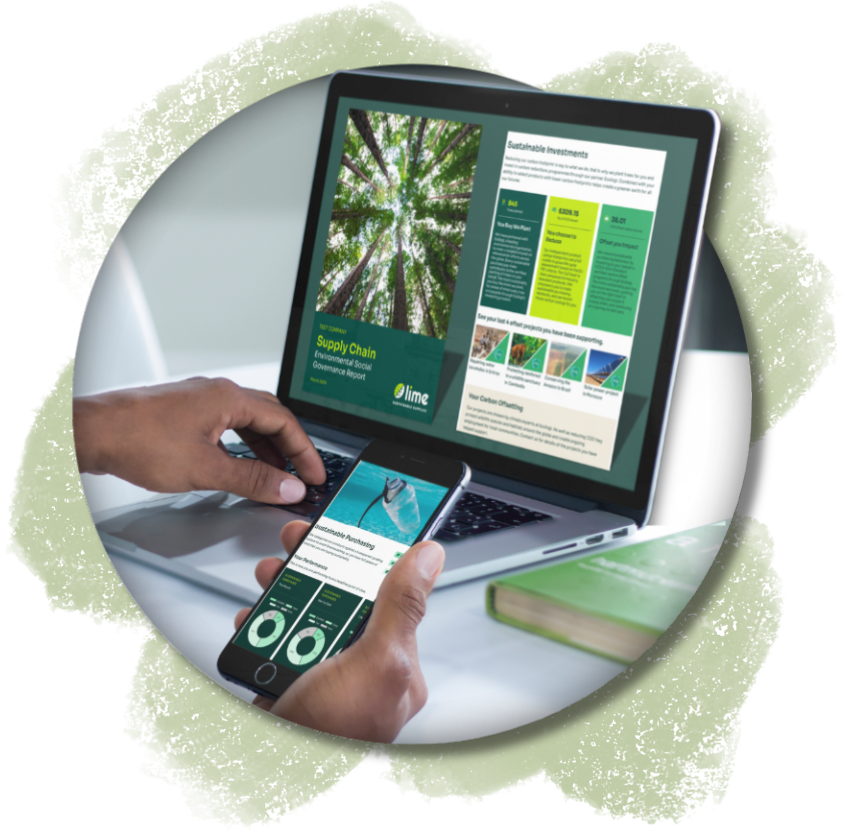 Buyers increasingly weight sustainability in pre-qualification and tenders. With transparent lifecycle analysis, auditable Scope 4 savings, and monthly visual reports, you can substantiate environmental claims and demonstrate year-on-year progress. This supports compliance and differentiates your bids.
Where Lime fits in
Lime provides Ecolabel-backed formulations with full lifecycle analysis, bulk and refill systems, and free monthly ESG reporting that translates procurement data into carbon savings. Every sustainable purchase supports tree planting through Ecologi. Next-day delivery across the UK enables rapid deployment across multi-site estates.
If you are ready to review specifications, you can explore our range of sustainable cleaning supplies with supply chain transparency and refill options that integrate into existing protocols. For example, many teams begin by standardising on green cleaning products in core categories, then add controlled paper systems and refillable hand hygiene across priority buildings.
Next steps
You do not need to overhaul your entire operation to cut emissions. By switching to concentrated and refillable cleaning lines, upgrading washroom paper systems, and choosing verified non-toxic formulations, you will lower carbon, reduce waste, and improve compliance. Pair these changes with monthly ESG reporting and responsible offsetting to build a credible net zero pathway. Lime can help you baseline, specify, deploy, and evidence progress with data your stakeholders will trust.