

Refillable systems are no longer a sustainability side project; they are a proven operations strategy that cuts cost, risk and carbon while strengthening compliance. If you run multi-site estates, standardising on concentrates, water-soluble sachets and bulk dispense can remove tonnes of plastic from your waste stream, simplify audits, and protect margins in tight budgets. This guide sets out the commercial case, the compliance controls, and a pragmatic rollout plan that procurement and FM teams can deploy this quarter.
The cost case: where savings are realised
Moving from ready to use trigger bottles to concentrates and sachets delivers savings in four places:
- Unit cost per usable litre drops materially, often by 30 to 60 percent depending on product and dilution.
- Waste handling costs fall as single use plastic is removed from back of house bins and collections. Many estates see 70 to 90 percent fewer empty containers.
- Transport and storage costs reduce because you ship actives, not water. Pallet counts fall and on site storage density improves, freeing space for critical spares.
- Shrinkage and over dosing decline with closed loop or optical dosing, which standardises mix ratios and reduces product waste.
Illustrative model for a 50 site estate using 10,000 RTU bottles per month, 500 ml each:
- Plastic reduction: approximately 2.5 tonnes of PET/HDPE per year removed when switching to 5 litre concentrates and PVOH sachets with Bottle for Life triggers.
- Transport: moving from 10 pallets per month of RTU to 3 pallets of concentrate or sachets can cut logistics emissions by 50 to 70 percent, with further gains if deliveries are consolidated.
- Waste cost: if general waste is charged at £160 per tonne all in, removing 2 tonnes of empty bottles and mixed packaging can release £3,000 to £4,000 per year.
Your exact figures will vary. Lime’s monthly ESG reporting quantifies the plastic and carbon avoided at product and site level, so you can attribute Scope 4 savings in board packs and tenders.
Risk, compliance and COSHH, built in
Facilities teams must evidence control of substances, data integrity and safe use. Concentrates and sachets support compliance when implemented correctly:
- COSHH and CLP: supply Safety Data Sheets, product labels and workplace dilution charts for every concentrated chemical. Use colour coding and site laminated guides beside dispensers.
- SDS control: store the latest SDS centrally and on site, version controlled, with QR access at the point of use. Lime supplies COSHH folders and digital packs aligned to each product.
- Closed systems: prefer closed loop or measured dose devices to prevent contact and over exposure. Water soluble PVOH sachets remove open pouring for most daily cleaning tasks.
- Secondary labelling: Bottle for Life triggers should carry compliant secondary labels showing product, dilution, hazard statements and first aid.
- Spill, exposure and eye wash: integrate into your risk assessment and toolbox talks. Audit monthly.
For public sector and large FM contracts, align documentation with your ISO 45001 and ISO 14001 systems. Lime’s product files include Ecolabel where applicable and LCA evidence for environmental aspects.
Change management across estates

Success comes from a structured rollout that protects continuity while demonstrating quick wins.
Pilot and prove
- Select 3 to 5 representative sites, map surfaces and cleaning tasks, and replace high volume lines first, for example sanitiser, multi surface and floor cleaner.
- Validate performance with ATP or visual standards, capture dosing accuracy, and record staff feedback.Standardise specifications
Approve a core list of SKUs, dilution ratios, dispenser types and Bottle for Life formats.
- Lock naming and colour coding to reduce mis picks and training burden.
Train and certify
- Deliver short toolbox sessions for supervisors and operatives, 20 minutes per product group, covering safety, dilution and use cases.
- Use competence sign off sheets and QR micro videos at point of use.
Deploy, then audit
- Install dispensers, position sachet storage and issue triggers, one zone at a time.
- Audit monthly for compliance, dosage, and product mix. Use findings to tune the specification.
Lime supports each stage with sample packs, dispenser compatibility checks and pilot templates so you can move from decision to live in weeks, not months.
Dispenser compatibility and stockholding
- Compatibility survey: document existing wall space, water and drain access, and brand constraints in washrooms and back of house. Many modern dispensers accept third party concentrates with correct fittings.
- Bottle for Life: issue durable, labelled trigger bottles in mandated colours to remove single use. Replace only when damaged.
- Buffer stock: hold 4 to 6 weeks of concentrates at regional hubs, with sachets centrally. Implement min max levels in your CAFM or procurement platform to prevent stockouts.
- Vendor managed inventory: consider scheduled replenishment tied to site usage to stabilise deliveries and reduce emissions.
Quantifying plastic, waste and transport emissions
Use these simple, defensible methods to populate your baseline and savings:
- Plastic packaging: calculate grams of plastic per RTU bottle multiplied by volume. Subtract plastic mass of concentrate containers and durable triggers. For sachets, packaging mass per dose is typically 90 to 95 percent lower than RTU equivalents.
- Waste handling: apply your contracted per tonne cost to reduced container tonnage. Include avoided cage collections if relevant.
- Transport emissions: convert pallets or litres shipped to tonne km, then apply Defra/BEIS emission factors. Concentrates and sachets reduce water carriage by up to 90 percent, which reflects directly in transport CO2e.
Lime’s ESG reports automate this with product level LCAs and clear visual outputs per site and month.
Are eco-friendly cleaning products effective?
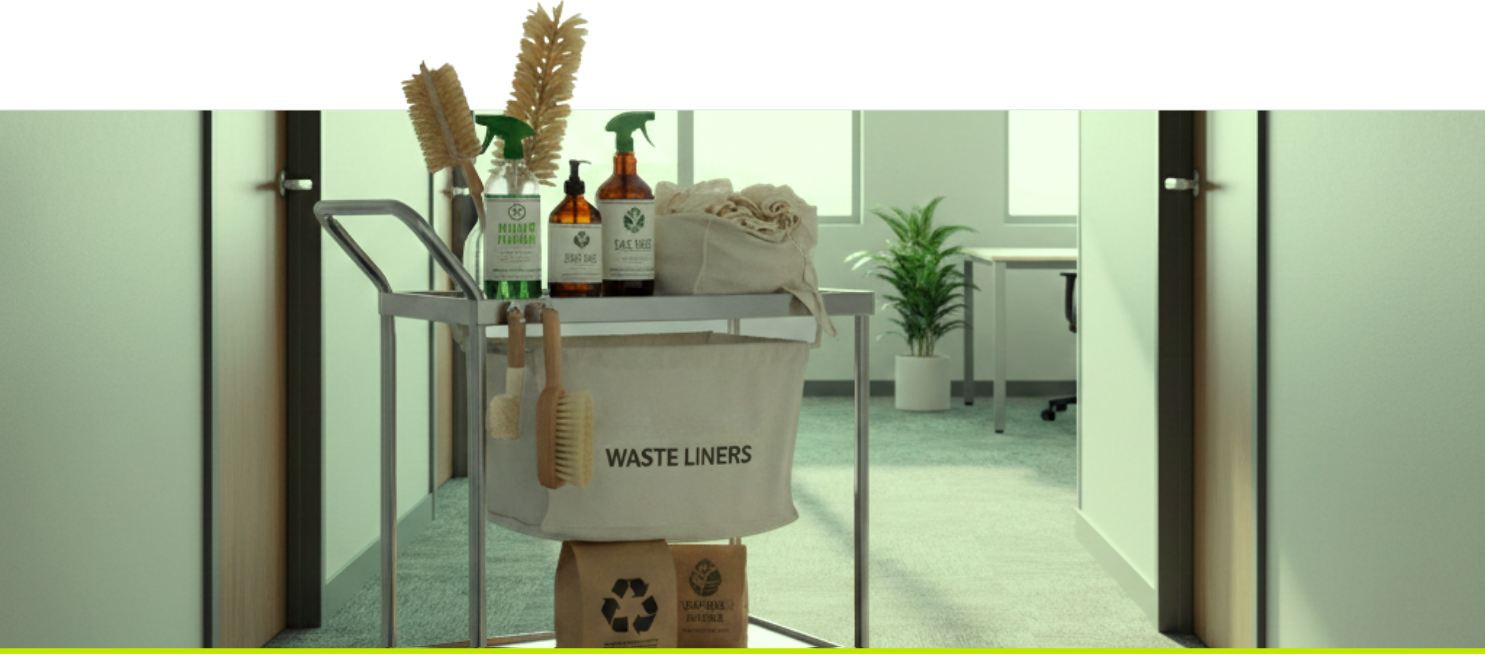
Yes, when specified correctly and dosed accurately, professional formulations match or exceed conventional performance. For example, biotech and enzymatic concentrates deliver excellent soil breakdown on floors and washrooms while maintaining low aquatic toxicity and CLP free use dilutions for operatives. Performance validation should include:
- On site trials with defined soil loads and surface types.
- Consistent dilution via dosing devices or sachets.
- Hygiene verification where required, for example ATP or swab tests in catering and healthcare.
What is a sustainable cleaning product?
In institutional settings, a sustainable cleaning product is one that:
- Demonstrates reduced lifecycle impact through LCA, with clear sourcing, manufacturing, transport, use and end of life data.
- Minimises packaging through bulk or refill formats, enabling reuse with Bottle for Life and compatible dispensers.
- Uses safer chemistries with lower aquatic toxicity and reduced hazard at use dilution, supported by recognised certifications, for example Ecolabel where applicable.
- Provides auditable data that supports your ESG reporting and procurement compliance.
How do you know if a cleaning product is eco-friendly?
Ask for the data. Require:
- Full SDS and product labels, plus a clear dilution guide.
- Lifecycle analysis or carbon footprint per unit, with methodology.
- Proof of packaging mass and recyclability.
- Third party certifications where relevant.
- Supply chain transparency, including country of manufacture.
If a supplier cannot provide these consistently, treat claims as marketing rather than evidence.
What are the best eco items for estates?
Prioritise changes with the highest impact per pound and lowest operational friction:
- PVOH soluble sachets for daily cleaning tasks in spray bottles and buckets.
- Super concentrates with closed loop dispensers for floors and washrooms.
- Bottle for Life triggers to eliminate single use sprayers.
- Plastic free paper consumables and controlled use dispensers for washrooms.
- Compostable bin liners where waste streams support them.
Procurement specification template, ready to lift
Include these sections in your RFT or contract schedules:
Product and format
- Concentrate strength and dilution ratios for each task.
- Sachet dose size and surface compatibility.
- Dispenser type, mounting and water requirements.
- Bottle for Life volumes, colours and secondary label requirements.
Compliance and safety
- Current SDS, CLP labels, COSHH assessments and training materials.
- Evidence of Ecolabel or other recognised certification where applicable.
- Workplace exposure controls and spill procedures.
Sustainability and data
- Product level LCA, packaging mass and recyclability.
- Monthly ESG reporting including Scope 4 savings and plastic reduction.
- Evidence of UK manufacture where relevant and transport emission factors.
Service and rollout
- Site survey, dispenser installation and commissioning.
- Training plan, competence sign off and refresher cadence.
- Pilot criteria, acceptance testing and change control.
KPIs and SLAs
- On time delivery, target 98 percent.
- Stock availability, target 97 percent lines in full.
- Plastic avoided per month, baseline plus stretch target.
- Transport CO2e per £1,000 of goods, reduction target quarter on quarter.
- Training completion rate and audit pass rate per site.
Auditing and continuous improvement
- Monthly audits: dosage accuracy, secondary labels, PPE and storage. Record findings and close actions within 30 days.
- Quarterly reviews: LCA performance by category, waste stream impacts and delivery consolidation opportunities.
- Annual re tender or extension: update specifications to reflect new low toxicity formulations and increased recycled content.
Why Lime
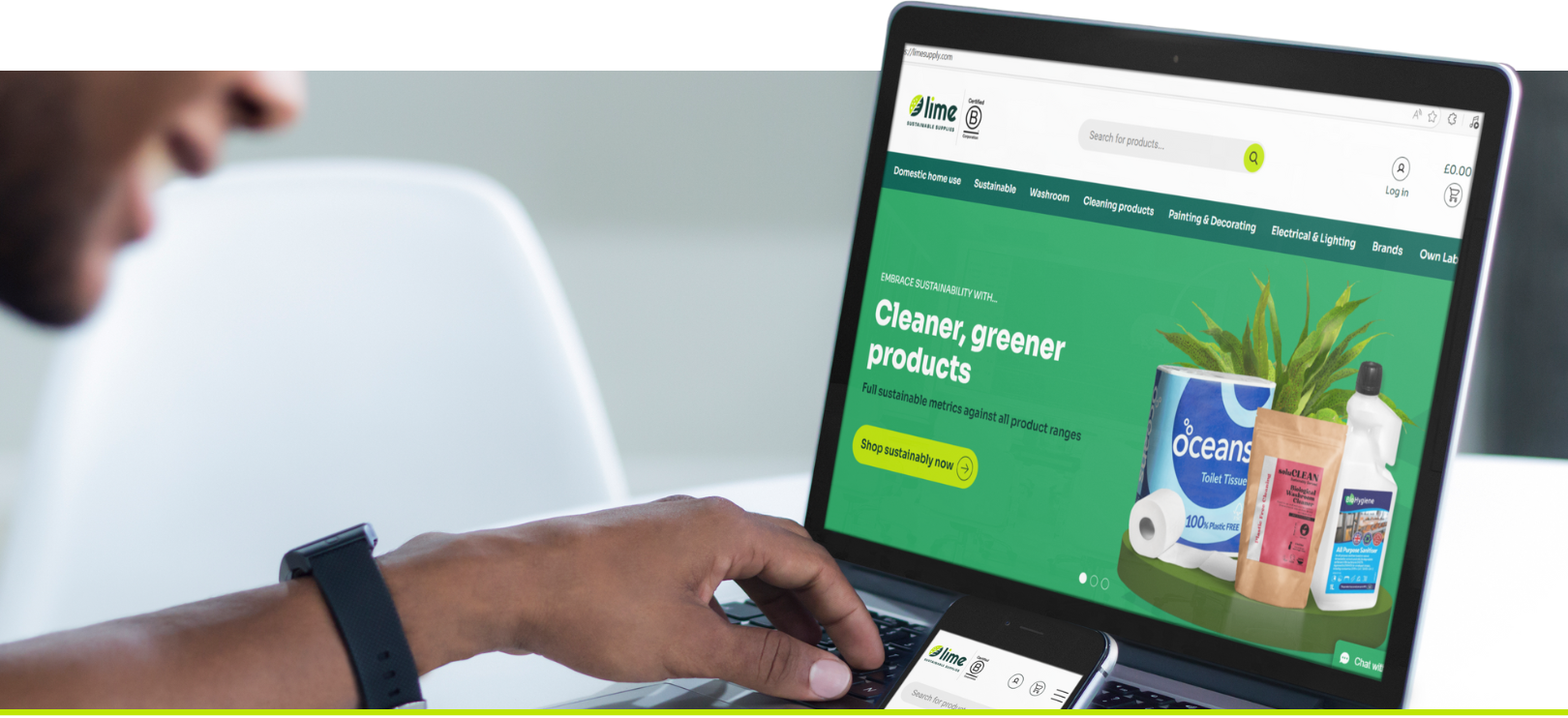
Lime provides professional grade refill systems, PVOH sachets such as Soluclean formats, Bottle for Life triggers, and next day UK delivery. Every product is backed by lifecycle analysis and transparent supply chain data. You also receive free monthly ESG reporting that evidences plastic and carbon reductions at product and site level, suitable for audits and tenders. Implementation support includes dispenser compatibility checks, pilot templates, training assets and ongoing advisory.
If you are consolidating suppliers or preparing a tender, you can review our range of sustainable cleaning products to align specifications with your carbon and compliance goals. For washroom programmes, our washroom cleaning products are designed to reduce waste while maintaining standards. If you are refreshing product lists, our green cleaning solutions can help standardise across estates without sacrificing performance.
Summary
Eliminating single use plastics in janitorial operations is a straightforward business decision when you quantify the cost and risk. Concentrates, sachets and refill systems reduce packaging, waste handling and transport emissions while improving compliance via standardised dosing and better COSHH control. With a structured pilot, clear specifications, robust training and regular audits, you can transition across multi site estates rapidly. Lime can support with products, data and ESG reporting that make your savings defensible and your operations simpler.