

Procurement teams in cleaning and facilities management have already made many sustainable choices, from switching to concentrates to trialling plastic-free washroom paper. The challenge now is proving impact in a format that satisfies auditors, boards, and UK reporting requirements. Good intentions are not enough. You need structured data, a clear evidence trail, and a cadence that turns monthly purchasing into institution-wide ESG disclosures.
This guide outlines what to capture, how to verify it, and how Lime’s monthly visual ESG reporting plugs into procurement workflows to produce audit-ready outputs for SECR, net zero roadmaps and stakeholder packs.
Build the evidence chain that auditors expect
Robust ESG reporting starts with traceable evidence. For each product line, maintain a consistent trail that links purchase to impact:
- Product identity: SKU, supplier, category, site and cost centre.
- Lifecycle analysis (LCA): cradle-to-grave carbon footprint with functional unit stated, methodology summary and version date.
- Certifications: recognised marks such as Ecolabel, with certificate IDs, scope, expiry, and the specific claims covered.
- Supplier attestations: written confirmation of ingredient profiles, recycled content, country of origin, manufacturing energy mix, and packaging composition.
- Packaging specification: weight by material stream, recyclability, reuse or refill route, and single-use plastic status.
- Use-phase detail: dilution ratios, dispenser compatibility, and dosing method to support real-world emissions factors.
- End-of-life assumptions: typical recovery route, expected recycling rate, and any take-back scheme evidence.
Lime provides product-level LCAs, recognised certifications where applicable, supplier transparency statements, and packaging data so procurement does not need to assemble these inputs from scratch. All claims are linked to source documents suitable for audits and tenders.

Scope 4 methodology in practice
Scope 4 refers to avoided emissions attributable to your purchasing decisions when compared with a conventional baseline. For cleaning and FM categories, the most material levers typically include:
- Concentrates and refill systems replacing ready-to-use formats, reducing packaging mass and transport emissions per functional use.
- Plastic-free or reduced-plastic washroom paper, lowering upstream material and end-of-life impacts.
- Energy-efficient lighting retrofits, reducing electricity consumption during use-phase across multi-site estates.
- Recycled or lightweighted packaging that reduces material inputs and logistics loads.
A practical Scope 4 calculation framework:
- Define the functional unit. For example, 1,000 surface cleans at specified dilution; 10,000 hand dries; 1 MWh of lighting service over standard operating hours.
- Set baselines. Use a credible market-average comparator or your historical product, with transparent assumptions.
- Quantify impacts. Use third-party LCA values per functional unit for both baseline and selected product, then compute avoided emissions. Document data sources and dates.
- Attribute savings. Aggregate by site, cost centre and period. Keep clear separation between procurement-driven reductions (Scope 4) and operational energy (Scope 1 and Scope 2) to avoid double counting.
Lime’s reports include product-level LCAs and pre-modelled Scope 4 savings versus conventional equivalents, aggregated monthly and year to date, with assumptions and baselines disclosed.
A UK-ready reporting cadence
Align procurement data with UK frameworks such as Streamlined Energy and Carbon Reporting (SECR) and organisational net zero plans:
- Monthly: ingest purchase orders, goods received notes and site-level consumption metrics. Generate visual dashboards showing category impacts, Scope 4 savings and packaging reductions. Flag outliers and optimisation opportunities.
- Quarterly: consolidate trends for leadership reviews and audit committees, with variance analysis against plan and procurement pipeline changes.
- Annually: produce assurance-ready packs aligning with SECR carbon narratives and progress against net zero targets, evidencing institution-wide impacts and methodology notes.
Lime provides free monthly visual ESG reports for procurement and FM teams, designed to roll up cleanly into quarterly and annual disclosures and to support tenders and supplier audits.

Data schema procurement teams can use
Adopt a consistent schema so purchasing systems and ESG reporting align. Suggested core fields:
- Organisation: legal entity, site, business unit, cost centre.
- Transaction: PO number, invoice, delivery date, quantity, unit of measure.
- Product: SKU, category (cleaning, washroom consumables, packaging, lighting), brand, certification IDs.
- Environmental data: LCA per functional unit, packaging mass by material, recycled content, hazardous classification, water use, and end-of-life route.
- Scope 4 fields: baseline identifier, baseline LCA per functional unit, assumed functional equivalence, avoided emissions per unit, aggregated savings.
- Evidence references: certificate links, supplier attestations, test reports, MSDS links and version dates.
Lime integrates this schema into procurement workflows so evidence and metrics map directly to purchasing lines, avoiding manual rework.
Dashboards that boards and stakeholders understand
For clarity and decision-making, use a small set of visuals repeated every month:
- Institution-wide carbon savings: Scope 4 avoided emissions by category and site, month and year to date, with baseline comparison.
- Packaging reduction: single-use plastic avoided, packaging mass by material stream, refill adoption rate.
- Financial proxy metrics: indicative cost avoidance from concentrates and lighting retrofits, presented with caveats.
- Compliance status: certification coverage, expiring certificates, and supplier evidence completeness.
- Pipeline and forecast: planned specification changes and modelled incremental Scope 4 savings over the next quarter.
Lime’s monthly reports deliver these visuals as standard, with drill-down to product and order level for audit traceability.
Category playbooks
Cleaning: Prioritise concentrates and biotech formulations with documented low aquatic toxicity and strong hygiene performance. Capture dilution ratios and dispenser data to support functional-unit modelling. Where relevant, consider recognised certifications and third-party performance tests.
Washroom consumables: Track paper specifications, recycled content, and dispenser-controlled usage. Capture data for bulk toilet rolls, jumbo and mini jumbo formats, and hand towel lines to show reduced changeouts and packaging.
Packaging: Record recycled content, recyclability, and any water-soluble sachet deployments. Quantify single-use plastic alternatives and the resulting waste-stream impacts.
Lighting: Model site-by-site retrofit scenarios, using metered or modelled operating hours, product efficacy, and maintenance intervals. Translate into avoided electricity consumption and embodied carbon improvements over lifecycle.
For product sourcing, you can explore sustainable options such as washroom cleaning products and paper systems, then map selections directly into reporting.
- Explore washroom supplies that integrate with dispenser-controlled usage: https://limesupply.com/product-category/washroom-products
- Review sustainable cleaning supplies and concentrates with LCA support: https://limesupply.com/product-category/cleaning-products
- Assess sustainable painting supplies for refurbishment periods and related lifecycle data: https://limesupply.com/product-category/paint-decorating
- Evaluate eco-friendly dishwasher and laundry solutions for catering operations with refill formats: https://limesupply.com/product-category/domestic-products/dishwashing
How monthly ESG visuals support SECR and net zero
SECR requires transparent, consistent reporting of energy use and associated emissions for qualifying UK companies. While Scope 4 is not mandated, many organisations use it to evidence procurement-led reductions that support the net zero narrative. Monthly visuals:
- Provide a defensible story for boards showing how specification changes deliver measurable reductions.
- Surface anomalies early, so procurement can adjust contracts or product lists before year end.
- Create a documented trail of assumptions, baselines and supplier evidence that underpins external assurance.
Lime’s reports include product and category LCAs, Scope 4 attribution, certificate status and invoice-linked offset records via Ecologi, ready to append to SECR annexes and net zero roadmap updates.
Frequently asked questions
- What are eco-friendly products in a professional cleaning context? Eco-friendly products are those designed to minimise environmental impact across the full lifecycle, supported by recognised certifications and LCA data. In practice, that means lower-toxicity chemistry, reduced single-use plastic, refill options, and transparent supply chains.
- How do you know if a cleaning product is eco-friendly? Check for third-party certifications such as Ecolabel, request the LCA per functional unit, verify ingredient and packaging disclosures, and ask for supplier attestations. If the supplier cannot provide auditable evidence, treat the claim cautiously.
- What is being eco conscious for procurement and FM teams? Being eco conscious means embedding lifecycle thinking into specifications, selecting suppliers that provide verifiable data, favouring refill and bulk systems, and reporting outcomes through a documented methodology that stands up to audit.
Bringing it together
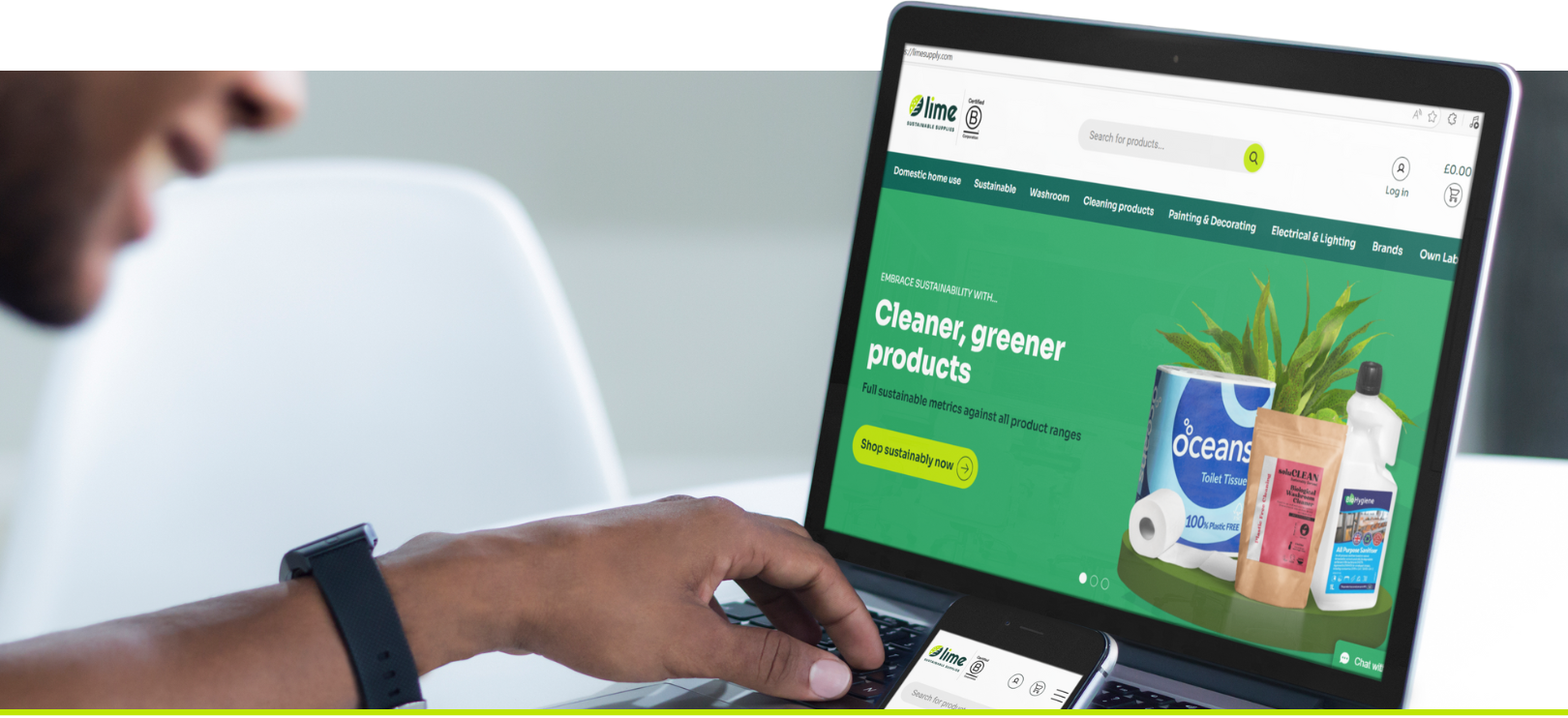
Turning sustainable purchasing into audit-ready ESG disclosure requires discipline. Capture standardised data at the point of purchase, verify claims with certifications, LCA and supplier attestations, and present outcomes through consistent dashboards and a clear Scope 4 methodology. With Lime’s free monthly visual ESG reporting integrated into your procurement workflow, you can evidence institution-wide savings, support SECR narratives, and brief boards with confidence.
If you would like a live data briefing or sample reporting pack aligned to your current product list and sites, contact Lime to schedule a session and identify immediate, procurement-led savings opportunities.