

If you manage procurement or facilities, you already feel the pressure to cut emissions without compromising performance or cost. The challenge is not intent, it is clarity. Where exactly are the wins, how do you prove progress, and how do you turn purchasing choices into measurable carbon savings? This is where free, visual ESG reporting becomes a practical accelerator. With clear data each month, you can see the impact of yourproduct mix, isolate the hotspots, and make targeted switches that reduce carbon, plastic, and waste across your estate.
ESG reporting, made useful for procurement

ESG reporting should be more than a compliance exercise. When the data is visual, frequent, and product level, it becomes a decision tool for procurement and FM teams. Lime’s monthly ESG reports show:
- Category and product level carbon footprints based on lifecycle analysis.
- Scope 4 carbon savings compared with standard equivalents.
- Plastic reduction from bulk and refill formats.
- Trends by site, building, or cost centre to target the next round of improvements.
This level of visibility helps you prioritise changes that deliver quick wins, then scale them across similar buildings or contracts.
What eco conscious means in a professional setting

You asked, what is being eco conscious? In an operational context, being eco conscious means building environmental criteria into your routine decisions and measuring the results. It is not a one off initiative. It is a consistent approach that:
- Uses lifecycle data to compare alternatives.
- Prefers refill systems and bulk formats to cut single use plastic.
- Selects certified products with transparent supply chains.
- Tracks carbon savings institution wide and reports them to stakeholders.
- Reviews performance monthly, then refines the next procurement cycle.
With that mindset, sustainability becomes part of your standard operating model, not a side project.
How free visual ESG reports drive action
Monthly reports turn broad goals into concrete steps. Typical actions that flow from the data include:
- Switching high volume lines to bulk or refill to reduce packaging and transport emissions.
- Consolidating SKUs to reduce deliveries, storage, and waste.
- Replacing legacy formulas with Ecolabel certified alternatives that maintain performance with lower impact.
- Standardising dispensers and dosing to prevent overuse and inconsistent dilution.
- Prioritising suppliers that publish lifecycle assessments and Scope 4 savings.
Because Lime’s reports benchmark your choices against industry standard equivalents, you can demonstrate the avoided emissions and communicate progress with confidence.
How to know if a cleaning product is eco-friendly
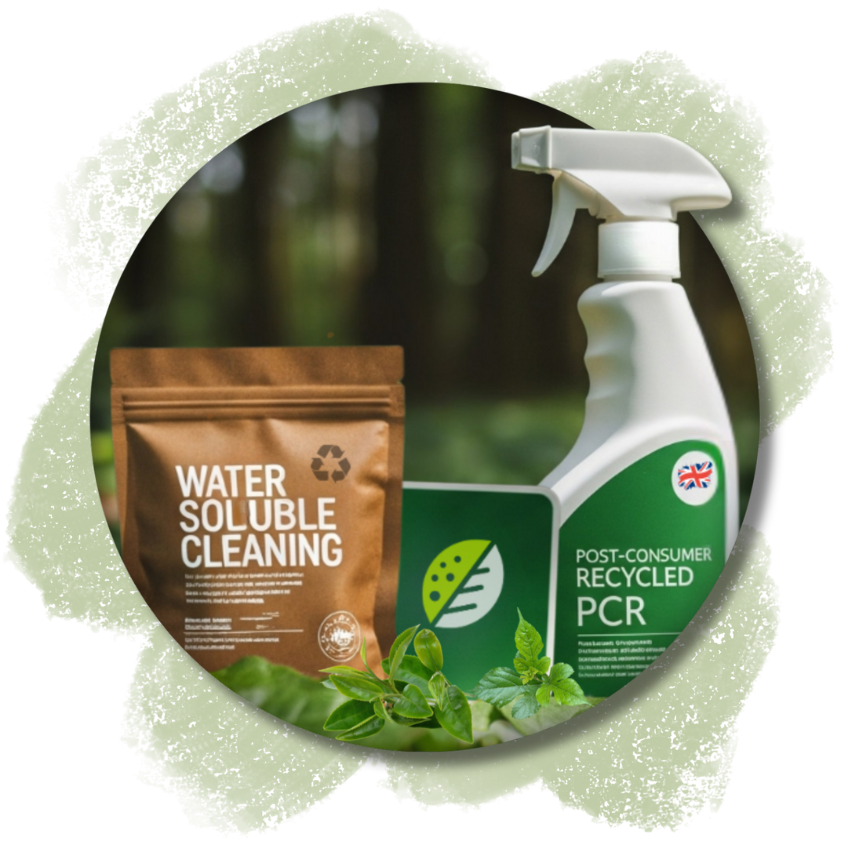
You also asked, how do you know if a cleaning product is eco-friendly? Look for five markers that cut through greenwashing:
- Independent certification: EU Ecolabel and similar schemes confirm rigorous criteria.
- Full lifecycle analysis: transparent carbon data from raw materials through end of life.
- Clear ingredient disclosures: avoidance of harmful or persistent chemicals.
- Refill or bulk availability: proven reductions in plastic and transport impacts.
- Supplier transparency: evidence of audited supply chains and ongoing improvement.
Working with a supplier that provides product level data and regular ESG reporting simplifies verification, so you do not rely on claims alone.
Can you be 100% eco-friendly?
 Another common question is, how to be 100% eco-friendly? In complex estates and high footfall environments, 100% is not realistic. The operational goal is continual improvement supported by evidence. Aim for:
- Best available options today, validated by certifications and lifecycle data.
- A roadmap for substitution when better formulations or formats become available.
- Procurement policies that default to refill and bulk where safe and compliant.
- Measured Scope 4 savings to recognise the benefit of improved choices.
Perfection is not the target. Measurable progress that compounds every month is.
From data to procurement change
Here is a simple, repeatable approach you can apply with Lime’s reporting:
- Baseline: capture product, volume, and carbon data for the last quarter.
- Identify hotspots: find categories with the highest total footprint and plastic usage.
- Pilot switches: run controlled trials of lower impact alternatives in a representative site.
- Verify performance: confirm cleaning outcomes, staff acceptance, and cost.
- Scale and standardise: roll out to similar sites, update specs, and train teams.
- Report and refine: use monthly dashboards to validate savings and plan the next change.
This cycle embeds sustainability into your procurement governance while maintaining service quality.
Examples of sustainable procurement moves
- Move high turnover lines to refillable formats to reduce plastic and deliveries.
- Implement dosing controls to cut chemical overuse and improve consistency.
- Standardise on Ecolabel lines with published lifecycle analysis.
- Prefer suppliers providing Scope 4 data, so you can capture avoided emissions.
If you want to explore options, browse categories such as green cleaning products, natural cleaning products, or renewable cleaning products to compare formulations and formats against your current specification.
What Lime’s ESG reporting includes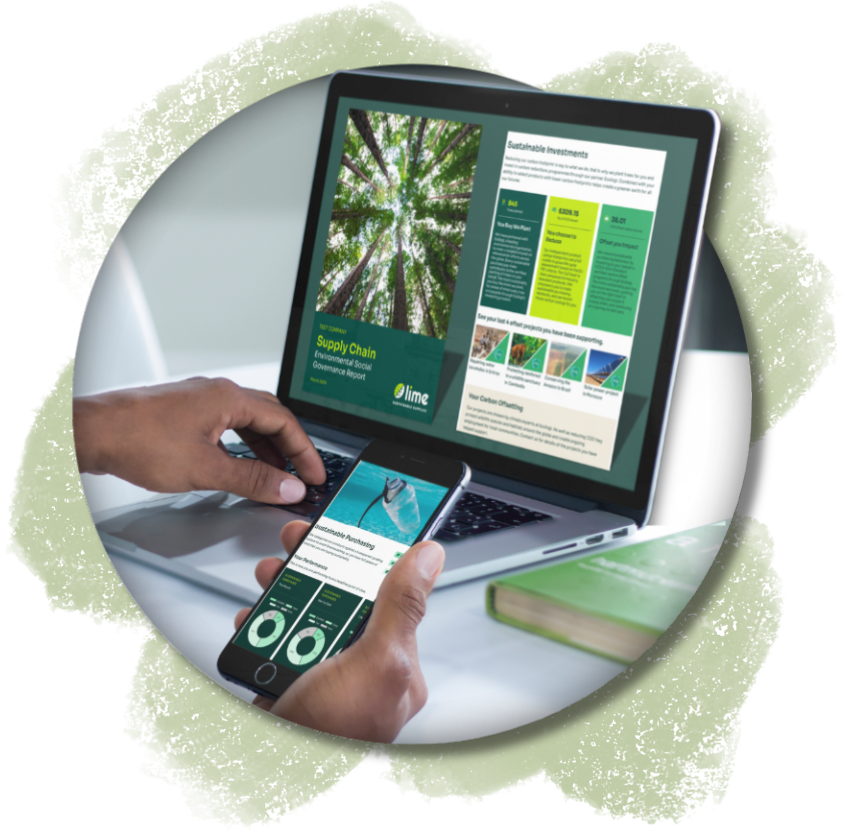
Lime integrates reporting with supply. Your monthly pack typically shows:
- Product and category carbon footprints with lifecycle boundaries defined.
- Scope 4 savings against conventional products.
- Plastic reduction from bulk and refill purchases.
- Visual trends by site and time period, highlighting where to act next.
- Ready to share summaries for board, ESG, or procurement committees.
The result is a clear link between each purchase and your institutional sustainability outcomes, including progress toward net zero.
Quick glossary for busy teams
- Lifecycle analysis: a cradle to end of life assessment of environmental impact, usually expressed as a carbon footprint.
- Scope 4: avoided emissions from switching to lower impact products or systems compared to the baseline.
- Ecolabel: a reputable certification confirming environmental performance across defined criteria.
- Refill systems: bulk supply that refills operational bottles or dispensers to cut single use packaging.
Better choices backed by evidence
When ESG data arrives monthly in a format you can act on, your team gains the confidence to change specifications, standardise on lower impact products, and prove the outcome. You do not need perfection. You need
momentum, backed by transparent lifecycle analysis and Scope 4 reporting. Lime’s free, visual ESG reports give you that clarity, so your procurement decisions deliver measurable carbon and plastic reductions across your
estate. Ready to turn insight into action? Speak to your Lime account manager about integrating monthly reporting with your current portfolio, then pilot targeted switches in your highest impact categories. If you are comparing options today, you can review sustainable cleaning products to align performance, compliance, and measurable environmental gains.